Showing posts with label WOMEN'S RIGHTS. Show all posts

Monday, 26 September 2016

The Politics of Pockets: The history of pockets isn’t just sexist, it’s politica

Much has been written about how sexism dictates whether a garment gets usable pockets. While class unquestionably plays a part, men’s clothing tends to have capacious, visible pockets; women’s clothing tends to have small pockets, if any at all. Content with their pockets, men have little to say about them, but women have been complaining about the inadequacy of their pockets for more than a century. "One supremacy there is in men’s clothing… its adaptation to pockets," Charlotte P. Gilman wrote for the New York Times in 1905. She continues, "Women have from time to time carried bags, sometimes sewn in, sometimes tied on, sometimes brandished in the hand, but a bag is not a pocket."

An historical reenactment of medieval bags. Photo: DEA / C. BALOSSINI / Getty
Truer words have rarely been written. A bag is not a pocket, and pockets — more than pants, more than ties, more than boxer-briefs, even more than suits — are the great clothing gender divide. Pockets are political, but probably not in the way you’d first expect.
Once upon a time, everyone carried bags. In the Medieval era, both men and women tied their bags to the waist or wore them suspended from belts; these bags looked very much like Renfaire fanny packs. As the rural world grew more urban and criminals more sophisticated, people cunningly hid their external pockets under layers of clothing to hinder cutpurses; men’s jackets and women’s petticoats were outfitted with little slits that allowed to you access your tied-on pockets through your clothing.


Hariette Wilson with Reticule. Photo: Hulton Archive / Getty
Only in the late seventeenth century did pockets make their move to become part of men’s clothing, permanently sewn into coats, waistcoats, and trousers; women’s pockets, however, failed to make the same migration. Lacking built-in pockets, women continued to hide their tied-on pockets, which were large, often pendulous bags. Secreted under their petticoats, panniers, and bustles, these highly decorated pockets swung heavy with their contents. You could fit a lot in those pockets — sewing kits, food, keys, spectacles, watches, scent bottles, combs, snuffboxes, writing materials, and money all found their place.
The French Revolution changed everything. While the mid-eighteenth century lavished in rococo, wide skirts that screamed decadence and wealth in their yards and yards of fabric, the end of the eighteenth century whispered restraint. Skirts pulled in close to the body, the natural waist crept ever upward, and the silhouette thinned to a slender column. This neoclassical look had no room for pouchy pockets, yet women still needed to carry their stuff. The reticule, a small, highly decorated purse, was born — and like a pernicious poltergeist, it has never really gone away. On the heels of the reticule, chatelaines— waist chains that resemble big, tinkling charm bracelets for the very busy — came into the consumer consciousness in 1828. Unlike purses, which hid everything away, these fashionable belts put women’s necessities on display.


A chatelaine. Photo: Heritage Images/ Getty
Writing for The Spectator in 2011, Paul Johnson offersa witty, thumbnail history of the sartorial convention of the pocket, and he caps his piece with a 1954 Christian Dior bon mot: "Men have pockets to keep things in, women for decoration." Tease apart that quote and you get a fairly essentialist view of gender roles as they play out in clothing. Men’s dress is designed for utility; women’s dress is designed for beauty. It’s not a giant leap to see how pockets, or the lack thereof, reinforce sexist ideas of gender. Men are busy doing things; women are busy being looked at. Who needs pockets?
This analysis of Western dress goes down pretty easy — maybe a little too easy. It’s not to say that pocket sexism isn’t true. It is to say that pockets are more than sexist: they’re political. One way to look at the transfiguration of women’s tied-on, capacious pockets of the mid-eighteenth century into the early nineteenth century’s tiny, hand-held reticule is to consider that this transformation occurred as the French Revolution, a time that violently challenged established notions of property, privacy, and propriety. Women’s pockets were private spaces they carried into the public with increasing freedom, and during a revolutionary time, this freedom was very, very frightening. The less women could carry, the less freedom they had. Take away pockets happily hidden under garments, and you limit women’s ability to navigate public spaces, to carry seditious (or merely amorous) writing, or to travel unaccompanied.
Pockets in women’s dress hit a watershed moment in the fin-de-siècle Rational Dress campaign. Founded in 1891, the Rational Dress Society called for women to dress for health, ditching corsets in favor of boneless stays and bloomers, wearing loose trousers, and adopting clothing that allowed for movement, especially bicycling. It hit its pinnacle just around the turn of the century, a time when men’s suits sported somewhere around 15 pockets — so it’s no coincidence that pockets abound in Rational Dress. An 1899 New York Times piece makes the somewhat tongue-in-cheek claim that civilization itself is founded on pockets. "As we become more civilized, we need more pockets," the piece says, "No pocketless people has ever been great since pockets were invented, and the female sex cannot rival us while it is pocketless."

Women riding 1880's bicycles. Photo: Mondadori/ Getty
Side by side with the Rational Dress Society was the New Woman, feminism’s first wave that included suffragettes, bluestockings, graduates of the Seven Sisters, and sundry other radicals who believed that women should have equal political and financial standing with men. Fashionable fin-de-siècle female clothing had fussy, tiny, impractical pockets that weren’t designed to hold anything. Rational Dress, however, allowed women to swagger with their hands in their pockets, a point that shocked one writer for period mag The Graphic in 1894: "The pockets of the ‘New Woman,’ admirably useful as they are, seem likely to prove her new fetish, to stand her instead of blushes and shyness and embarrassment, for who can be any of these things while she stands with her hands in her pockets?"
Advancing the notion of pockets as distinctly masculine, one 1895 designer of women’s bicycle "costumes" even included pockets for pistols. "Not all of them want to carry a revolver," says the anonymous tailor quoted by the New York Times, "but a large percentage do and make no ‘bones’ about saying so. Even when they do not tell me why they want the pocket, they often betray their purpose by asking to have it lined with duck or leather." You have to hand it to the pistol-packing women riding turn-of-the-century bicycles in their bloomers and split-skirt suits. The Nineteenth Amendment was still 26 years away when these women were practicing their Second Amendment rights.

Female friends enjoying their pockets in 1926. Photo: Davis/ Getty
"Plenty of Pockets in Suffragette Suit" reads a 1910 NY Times headline, and pockets aplenty is what you’d expect for a woman with polls on her mind. The suit, the piece explains, has seven or eight pockets, "all in sight and all easy to find, even for the wearer." This last bit about visible, straightforward pockets hints at the lingering anxiety over women’s clothing, privacy, and property. It’s not merely that women will strut with their hands in their pockets, on point to challenge men; it’s that women’s pockets could carry something secret, something private, or something deadly.
In the intervening century between suffragette suits and Susanna of Beverly Hills, the go-to bespoke suit-maker for women CEOs, presidential nominees, and television judges, much has changed for women and for women’s clothing. Not much has changed forwomen’s pockets, however. The easy explanation rests in the fact that as long as clothing designers make women’s clothes without pockets, women will have to buy purses. The ‘vaya-nya’ is nature's pocket," Ilana asserts on Broad City, but few women will be using theirs to hold their Metrocards and lipsticks.

The pocketless Democratic nominee. Photo: Robyn Beck/ Getty
So what’s the takeaway when we look at Hillary Clinton’s suit — for it’s not merely the white suffragette suit that makes Clinton the woman she is. The pantsuit is Hillary’s brand; it’s on t-shirts; it’s on her Instagram; it’s even the name that Hillary’s coder gave her website. Clinton’s choice of pantsuit is nothing new; just as she has been keeping hot sauce in her bag (swag) since the 1990s, so too has she been wearing pantsuits. These suits have tended to tonality, a slow unfolding of jewel-like blues and reds, of succulent berries and luscious mango, of desert greens and stoic greys. But they are also united by a near pocketlessness.
Proper as a prelate, Clinton’s suits could not be more respectable. They are the answer to what women can wear to convey relatable power. Seamless and sealed, these suits present Clinton’s body like a saint’s. Nothing goes into the suits, nothing comes out. There is nothing to hide in Clinton’s pantsuit, for there is no place to hide it. Whether voters understand the history of this message is something else altogether.

VIA HERE


Tuesday, 19 July 2016

7 ways to be a better ally to transgender women of color

It’s an unexpected problem, and one that is especially present in the push for LGBTQ rights. The LGBTQ movement has long been critiqued for focusing on white gay men above all others. Anyone deviating from that description often experiences tension in a movement that claims to include but commonly excludes them.
But there's one group that especially needs attention in this conversation of misplaced focus: transgender women of color. Holding multiple marginalized identities leaves them vulnerable to layered violence and discrimination, and that can extremely risky — sometimes, deadly.
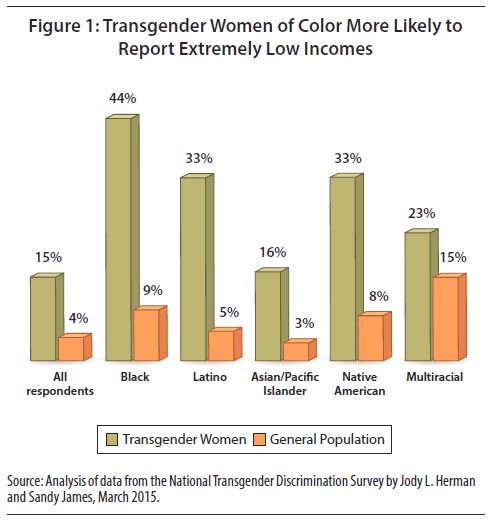
The majority of hate violence homicides in the LGBTQ community target transgender women of color, who also experience some of the highest rates of sexual violence, police brutality and employment discrimination.
But trans women of color have held undeniable importance in the queer community, from being the force behind the iconic Stonewall rebellion to embodying some of the most intense struggle that queer people can experience.
Even in facing down all this violence, trans women of color are rising in resilience to demand rights and respect — and true allies need to help them in that struggle.
If you don’t know where to start in improving your allyship, use these seven tips to help you navigate how to be a better ally to trans women of color.

1. Listen.

Trans women of color experience overlapping and intertwining barriers that keep them from being heard. Their experiences with gender and race — or, rather, a complex combination of those identities — often leaves trans women of color easily ignored or silenced by those who have privilege.

“A
Being an ally means addressing that head-on, by undoing that dynamic in your own life. And it all comes down to something relatively simple: listening.
For activist Raquel Willis, the first thing she notices about a good ally is someone who gives her the space to be heard. It’s an easy thing to notice, she says, because it's a space she doesn’t often get.
“A good ally doesn’t try to steer the narrative for trans people,” she tells Mashable. “They just listen. They understand that their role is to support me by hearing me first.”
Listening — completely and actively — actually takes a lot of work. But when you're an ally, it’s a mandatory effort.
If you don’t have a network of trans women of color in your life (or even if you do), take time to listen by reading about their lives and struggles through first-person narratives — even if they'retough to find.

2. Educate yourself — and others.

If you're actively listening to the experiences of trans women of color, you're getting an education at the same time. It’s important to value that as something trans women of color are empowered to share with you, but never as something they're obligated to grant you.
If there are gaps in your knowledge, it isn't the job of trans women of color to fill them. You should seek out the answers to your own questions, often through good, old-fashioned research.
"As an ally, it’s important to understand that it's your duty to seek out information about different groups, and the collective struggle they may have,” Willis says.

"
Though not often heard, trans women of color are indeed speaking about their struggles on social media, via hashtags like #GirlsLikeUs and #BlackTransLivesMatter, through blogs, or through academic writing. Value that work by engaging with it.
But all of these lessons aren’t something to keep you yourself. As important as it is to embrace learning through listening, it’s equally as important to pass it along.
"Allyship is about how you use information and education and awareness in spaces that don’t have [trans women of color’s] bodies — spaces where they aren’t present,” Willis says.
She adds that the biggest call-to-action for allies is to educate. It lifts the burden from trans women of color to constantly teach about their own trauma and struggle, while also helping to reach privileged populations who often ignore their voices.

3. Work to understand complex, layered stigma and oppression.

Even with a hyper-focus on a group like trans women of color, it's important to recognize experiences aren't universal within that group. 
It’s essential for allies to acknowledge there isn’t one standard "trans woman of color" experience.
"There’s a duty as an ally to not take one trans woman of color’s story as the only story,” Willis says. “If you are really interested in being an ally, you have to understand that there are so many diverse narratives out there.”


Willis says that even as a black trans woman, some parts of her narrative stem from privileges that other trans women of color may not have. She grew up in a middle-class household, had access to education and had a stable family structure to depend on. But that isn't the case for many trans women of color.
"We need to lift up the most marginalized people in the community," she says. "It’s really about the people who don’t have the access, who can’t do an interview, who can’t tell their stories."
Bamby Salcedo, president and CEO of Trans Latin@ Coalition, says that while it's necessary to have members of the community who will speak on their experiences publicly, that sometimes comes with the risk of promoting a single story.
“There's only some of us who get this recognition and get our lives highlighted," Salcedo says. "But unfortunately a lot of lives are not highlighted — especially that of a trans woman who is homeless or a trans woman who has had a hard time getting a job."
As an ally, be aware of the danger of the single story — and work to reject it.

4. Support comprehensive legal protections for trans women of color.

While there's more to the lives of trans women of color than the violence they face, this narrative does bring up a major need. Trans women of color need to be valued, embraced and protected — and many advocates argue legal protections are key.
Law, when sensitively enforced, plays an undeniable role in shifting culture, providing expectations of respect for vulnerable communities — and, currently, legal safeguards for trans women of color leave much to be desired.
"A lot of black trans women can’t find employment because of discrimination," Willis says. "A lot of black trans women don’t have access to education due to getting kicked out of their homes. There’s also the very real reality of trans women of color having to do sex work because there are no avenues for employment."

"
Salcedo calls supporting legal protections a sort of "investment" in the community.
"We need to hold our elected officials accountable for what is happening," Salcedo says, referring to the daily discrimination trans women of color fear or endure. "We need to realize the power we have and organize to create the changes we want to see in policy and our community."
To learn more about how the law has the potential to help support trans women of color, visit theNational Center for Transgender Equality and the Transgender Law Center.
To discover what your state is doing to protect trans women of color, visit this interactive map.

5. Recognize that everyday conversations can have an impact.

While legal protections are undeniably important, it can feel overwhelming to tackle the law as your only method of allyship and action. A more tangible path allies can take to make noticeable, daily change for trans women of color is in their own conversations.
"Policy and laws and legislation — all that stuff is great and that does shift the culture a good chunk," Willis says. "But also what shifts the culture is these everyday conversations that we have."


Willis says good allies will include trans women of color in tough conversations impacting their various communities — from violence against women to racial justice to LGBTQ equality. This inclusion helps put focus on the complex violence and discrimination trans women of color experience, while also shedding light on their often overlooked or misrepresented experiences.
A common example Willis gives is confronting the way society talks about the murders of trans women of color. If you are talking with someone who tries to blame a trans woman of color for "deceiving" someone, for example, see that as an opportunity to engage.
"That moment is a moment for you to really step up, and say that’s not OK," she says.

6. Risk your privilege to clear space.


For allies of trans women of color, risking unearned privilege is essential.
"It's all about tackling these conversations at every turn,” Willis says. “And that can be risky. That can be scary. There can be social ramifications for saying something like that.”

"I
If you have privilege, feeling bad about it does very little. Using it as a tool to lift others up, however, can be incredibly powerful.
“If you think there’s no risk in being an ally, then maybe you aren’t doing enough,” Willis says. "If you think it is going to be a breeze or that you can change your profile picture on Facebook and tackle what we need, that's not it."
It's crucial to remember risking privilege is never close to the daily harm, fear and challenges trans women of color experience when living out their identities unapologetically.
Even making the decision to risk your comfort is a luxury — populations like trans women of color don’t have the ability to choose.

7. Accept that you will never know the full story.


One of the key parts of being an ally to any community is understanding and accepting that you will never know the full story. Embracing that, especially when it comes to a group experiencing layered and complicated oppression, is essential.

Willis says that a good ally, especially to trans women of color, should be open to feeling vulnerable and uneducated, but should constantly look to change that.
But, she admits, the nature of allyship makes that goal impossible to ever completely achieve.
"Being an ally is hard to talk about because it is, at the same time, both simple and complex," she says. "It's about respecting the other person’s full humanity, but it’s also about understanding how to do that. And how to do that is really difficult because I don’t think most people have ever been fully respected in their humanity.
"To not know what that feels like and then have the desire to grant that to someone else is a really hard spot to be in," she adds.
Embrace the discomfort, and know it's your duty to never stop learning how to be a better ally.

source